
Aad Fock – the meaning and origin of an honorary name from Fockbek
This name comes from the tradition of a village, not from an aristocratic register. It recalls how a stranger came to Fockbek and proved that he belonged among its people.
What it is
According to the family tradition, the village assembly of farmers in Fockbek bestowed the honorary name on the Eider boatman Adriaan Focke in the spring of 1667. The bearer of the name is known in the village as “de Aadfock” (the Aadfock). Aad Fock is not a title of nobility. It carries no rank, and it is never written with “von” or used with forms such as Freiherr or Graf.
Its standing rests on the recognition of the village community. Those who bear it therefore understand it as an obligation to people, places and promises given.
Where it comes from
The name joins a personal history to the language of sailing. Fock is the foresail of a vessel. It also recalls Fockbek, first recorded as Fokabikre in 1196. Aad is a Dutch short form of Adriaan. The first bearer came from Friedrichstadt, founded on the Eider by Dutch religious refugees in 1621.
A west wind drove Adriaan Focke aground at Grönsfurt in the autumn of 1666. His mainsail had torn, but the foresail kept his Eider boat under control. What followed after his rescue joined Aad and Fock in a single honorary name. The full account is told in the history of the beginning (in German).
What it stands for
The chronicle draws three virtues from Adriaan’s conduct. They are shown in deeds rather than ceremony:
- Enterprise. Whoever sees what can be done begins the work.
- Wit. Whoever finds the comedy in a difficulty includes himself in the laughter.
- Loyalty. Whoever remains faithful to people and promises accepts that staying may cost more.
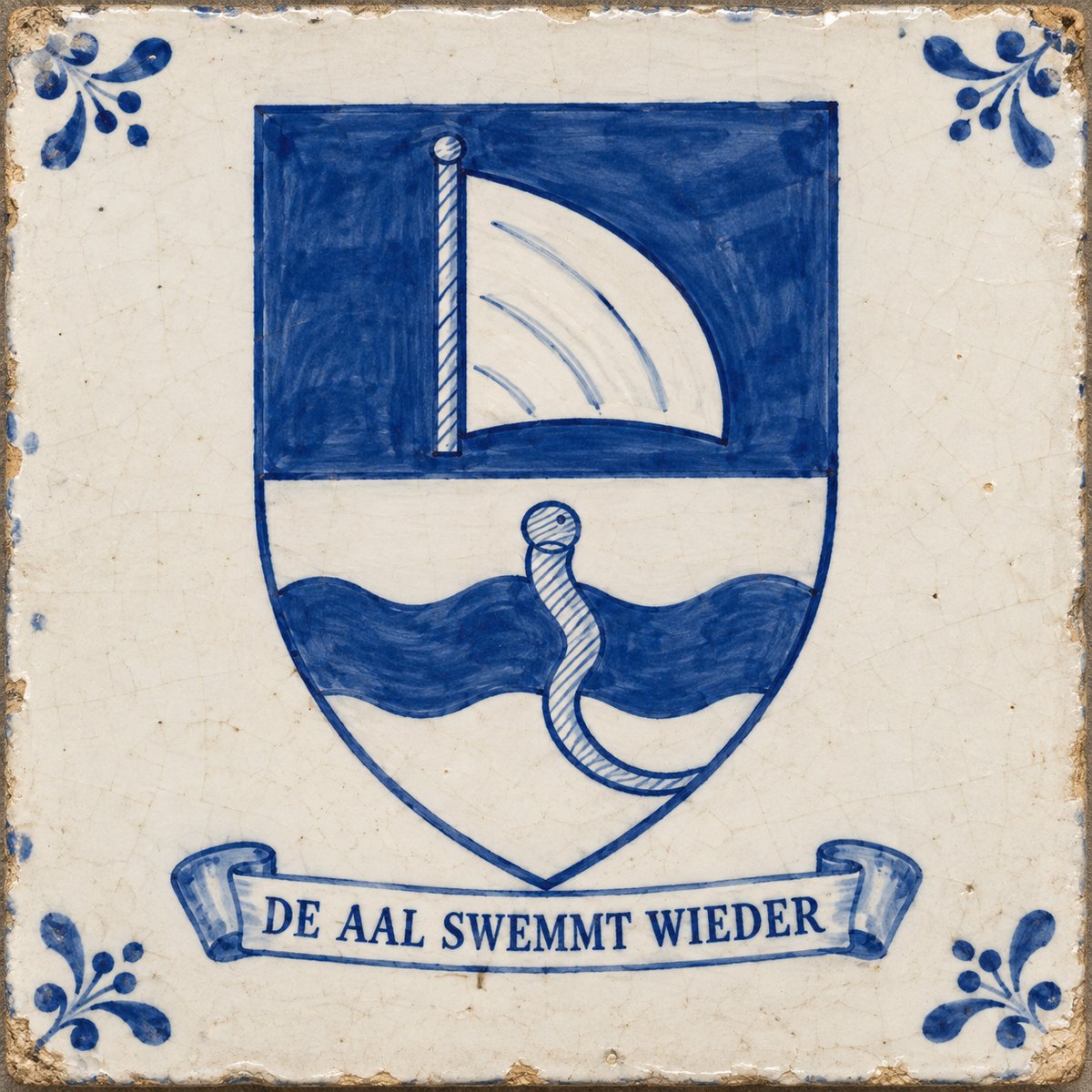
“De Aal swemmt wieder.”
In English: The eel swims on. What was meant to be drowned lives. These words have been the motto of the house since 1667.
Through the chronicle
- History (in German): the beginning in 1666 and the events that followed.
- Virtues: enterprise, wit and loyalty.
- Coat of arms (in German): the signs and colours in the tradition.
- Tradition (in German): the bearers of the name remembered in the family tales.
- Fockbeker Blätter: the Fockbek Papers written down by Grete Aad Fock.
- Questions and answers: brief guidance on the name, its pronunciation and its origin.
- About this chronicle: what belongs to local history and what belongs to the story.